(Still not the woodchuck, although she enjoys them as a snack)
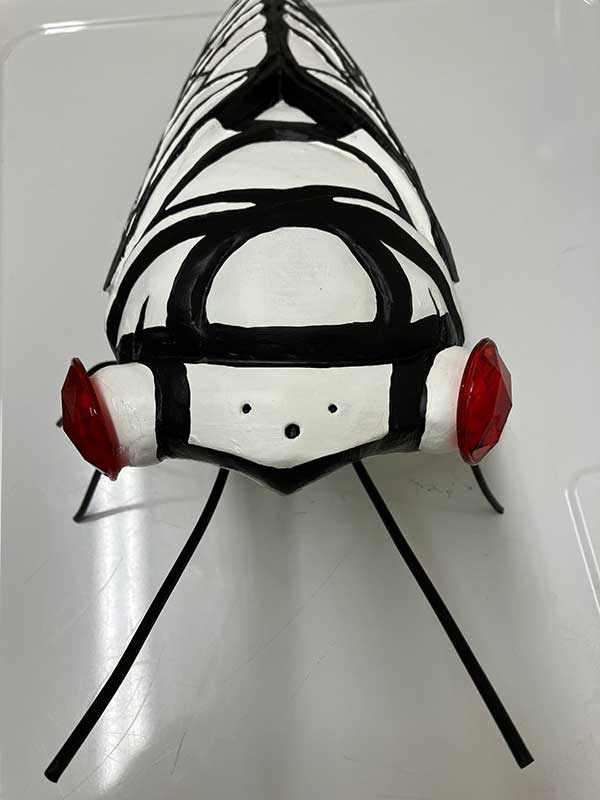
I am a proud participant in the Cicada Parade-A, a public art project happening around the city of Chicago and neighborhoods. As the real heroes emerge from the warming soil, so will these 18 inch plaster casts painted by anyone who is as fascinated by the bugs as I am.
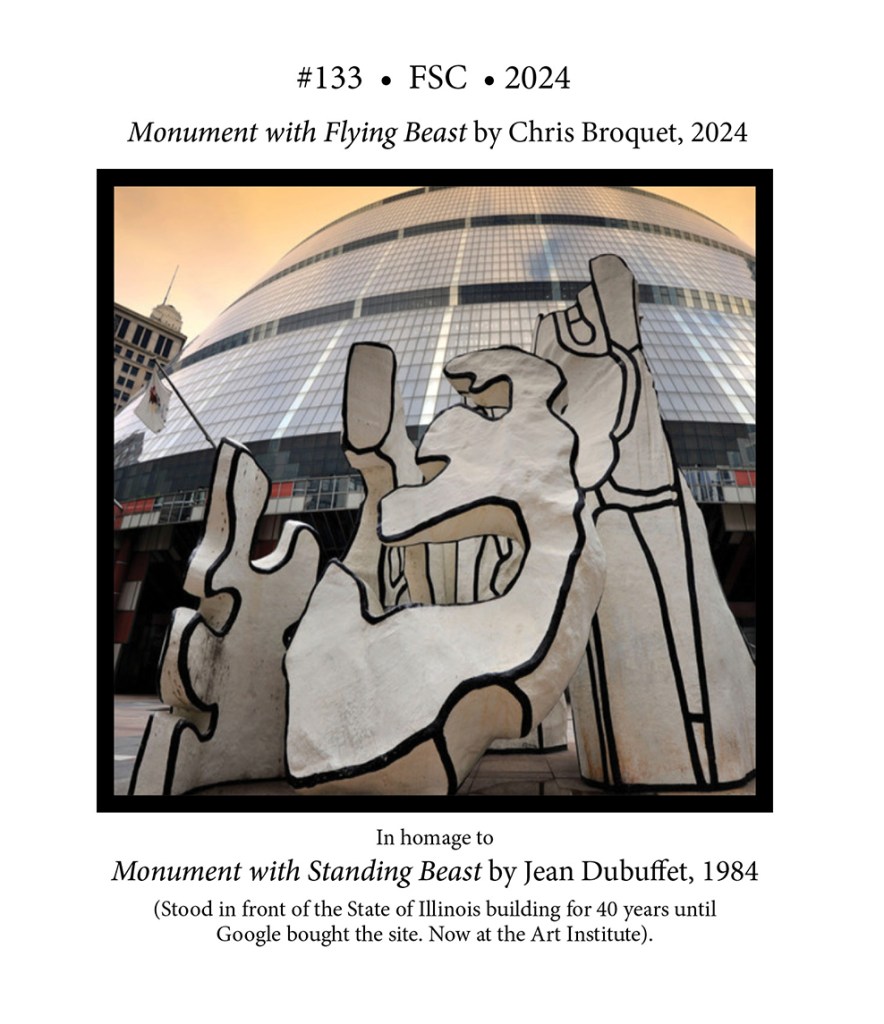
My cicada is called “Monument with Flying Beast”; it is a tribute to the piece of public art by Jean Debuffet that stood in front of the State of Illinois building downtown for forty years. Now that Google has bought the building, the sculpture will be moved to the Art Institute. The original piece was called “Monument with Standing Beast” and the abstract work represented an animal, tree, portal and architectural form, which also kind of applies to a cicada, amiright?
Public art endures as long as humans create! #cicadaparada
The meeting room I sat in had one wall that was all glass, which would have been a lovely diversion if it hadn’t looked out onto a parking lot. Sealed in like vacuum-packed salmon, I couldn’t even hear the drone of cicadas, which had been loud and constant that summer. Bored by the droning inside, a flash of white caught my eye outside. Abandoning any pretense that I was paying attention, I moved my chair closer to the window and was suddenly nose to nose with a tiny white creature. Its mouth was opening and closing silently, but it was clear the sound coming out was a pitiful meow.
“Look, it’s a kitten!” I shouted, completely disrupting the meeting. I grabbed a cardboard box and immediately ran outside. People at the window were pointing and shouting directions as I crawled under the bushes trying to find the cat. Their mouths opened and closed silently, and I realized this was the view the kitten must have had of us. Finally spotting it, I gently lifted it into the box. A silent cheer went up inside the room.
I took the tiny beast to my vet to get her checked out; he reported she was about six weeks old, skinny but in good health, probably abandoned by her mother. Amused, he said the fact that she survived on her own was amazing, but the truly astonishing thing was that her food source was cicadas. The proof was in the poop, which was full of insect exoskeleton. Eww. Trust me, you don’t want to be downwind of a cat who has been subsisting on these bugs.
That was 2007. How could I not keep a kitty with an origin story like that? My fascination with cicadas began when I learned that the kitten had been smart enough to hunt them as dinner. I use the term “hunt” loosely, as this was the last time the Brood XIII bugs emerged and there were so many of them scattered about the forest floor that it must have made a crunchy noise when she walked. Entomologists say that even the hungriest predators eventually get sick of eating cicadas, because the sheer number of them is mind-boggling and animals get tired of gorging on them. I’ve been told that works for pizza, too, although I have not found it to be true.
Seventeen years later, here they come again, and this time they are bringing friends. They are meeting up with the younger thirteen-year-old BroodXIX for the first time in one hundred years, and who knows what kind of party these guys are planning. The giant bugs are a bit creepy when you consider they will number in the billions, but aside from the ick factor, they are mostly just really loud. I am always stunned by the amount of exoskeleton left behind as they crawl out to mate for a swinging couple of days. At the last cicadapalooza, I collected cannisters full of their discarded shells, unsure why I wanted them but certain in the knowledge that I could do some kind of craft project. They are quite delicate, but with patience and a little shellac, I discovered that I could make fanciful earrings and necklaces out of them. I know what everyone is getting for Christmas this year!
The return of the seventeen-year Brood XIII cicadas is how I measure my cat’s time with me, like an oversexed bug growth chart with glowing orange eyes. That kitten is now old and fat and has outlived all the other pets in the house. She prefers her meals served from a can now, but we both look forward to the return of her former food source.
I may bring some live cicadas into the house just to see how she will react. Purina has a complicated formula that suggests she is the equivalent of eighty-four human years old. Some fresh, crunchy snacks might be just the nostalgic trip through her kittenhood that will make her forget how much her knees hurt when she still jumps up on the counter.
(The woodchuck is relaxing after her stressful eclipse experience, and will return later with her new art project, an installation that pays homage to Judy Chicago’s The Dinner Party; only instead of vaginas, it will feature cicadas. This essay is part of The Rude Brood, which is a subset of The Ripple Effect, which for some reason is occasionally part of the Blind Woodchuck. Don’t try to figure that out—at least it’s free!) Cat Eating Cicadas illustration by Cheryl Welch






 theblindwoodchuck.com